Scientists report that the Lost City, a bizarre cluster of limestone spires rising from the peak of an ocean-floor mountain, is at least 30,000 years old.
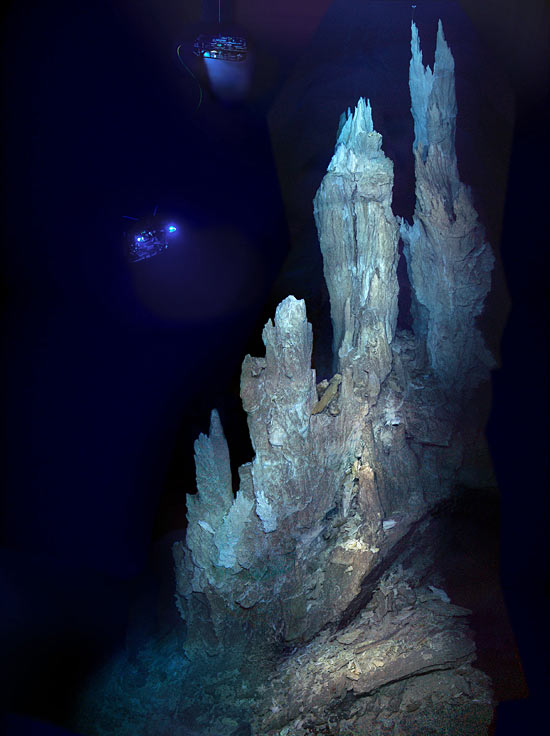


this spire is over 30 feet tall

The "city," on top of a mountain about as high as nearly 3-mile-high Mount Rainier, was discovered in 2000 by an expedition using a research submersible designed for deep-ocean diving. It was named for its towers, some as tall as an 18-story building.
The Lost City and the mountain below, called the Atlantic Massif, are part of a type of hydrothermal vent system never seen before.
Hydrothermal vents are areas on the ocean floor where chemical reactions take place between rocks, minerals and superheated seawater that is normally extremely acidic. The most famous structures found on vents are "black smokers," so named for the volcanic-like plumes of toxic compounds pouring out of natural chimneys on the seafloor. Inside and around these structures, which are much smaller than the spires of the Lost City, scientists have found the most primitive forms of life on Earth, known as archaea. They are similar in some ways to bacteria, but they do not require sunlight or oxygen to survive.
The Lost City vent system operates at much cooler, although still hot, temperatures and also contains living organisms.
Hydrothermal vents are of interest because they may yield clues to the origins of life.


